Why Voldemort could not kill Harry comes down to four layers of magic stacked on top of each other: his mother’s sacrificial protection, the blood bond formed when Voldemort drank Harry’s blood in 1994, Harry’s accidental Horcrux status, and the Elder Wand’s refusal to serve Voldemort. The first layer caused the rebound in 1981. The third one saved him again in 1998.
Spoiler warning: this covers the ending of Harry Potter and the Deathly Hallows and Dumbledore’s explanation in Harry Potter and the Cursed Child. Read the books first.
Table of Contents
- What Happened When Voldemort Failed to Kill Harry?
- Why Voldemort Could Not Kill Harry
- Did Lily’s Protection Make Harry Immune to Voldemort?
- Why Could Voldemort Not Touch Harry After the Attack?
- Was Harry’s Survival Really Because He Was a Horcrux?
- Why Did Voldemort Fail to Kill Harry as an Adult?
- What Does the Protection Reveal About Lily and Harry’s Bond?
- Frequently Asked Questions
- Why did Voldemort’s Killing Curse rebound back to him?
- Did Lily’s protection make Harry completely invulnerable?
- How did Harry become a Horcrux without Voldemort intending to make one?
- Why could Voldemort not touch or understand Harry after their attack?
- Was Harry protected because of his mother’s sacrifice or because he was a Horcrux?
- Could Voldemort have killed Harry with a different wand or spell?
- Conclusion
What Happened When Voldemort Failed to Kill Harry?
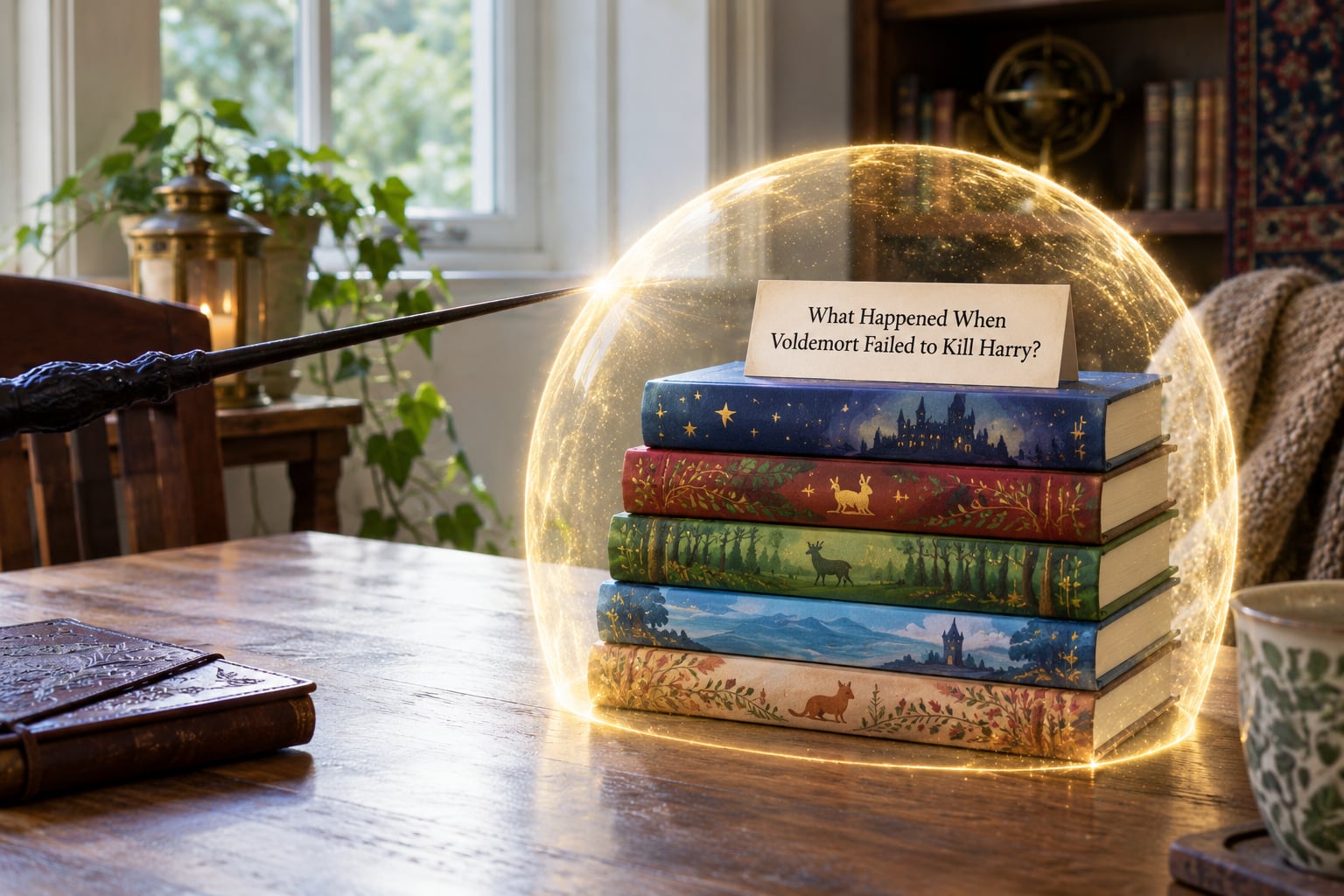
On 31 October 1981, Voldemort knocked on the door of a small house in Godric’s Hollow and killed James Potter before Lily could stop him. Then he turned on the baby in the yellow pram.
Lily did not run. She stepped between the door and her son, and Voldemort told her to step aside. She refused. That refusal is the whole answer. Lily’s willingness to die for Harry created sacrificial magic, and that magic threw the Killing Curse back at the man who cast it, taking his body with it.
Harry survived because the curse never touched him. Voldemort had not been blocked by a shield or outwitted in a duel. He was killed by a woman choosing her own death on principle, and Harry simply happened to be standing in the aftermath.
Why Voldemort Could Not Kill Harry
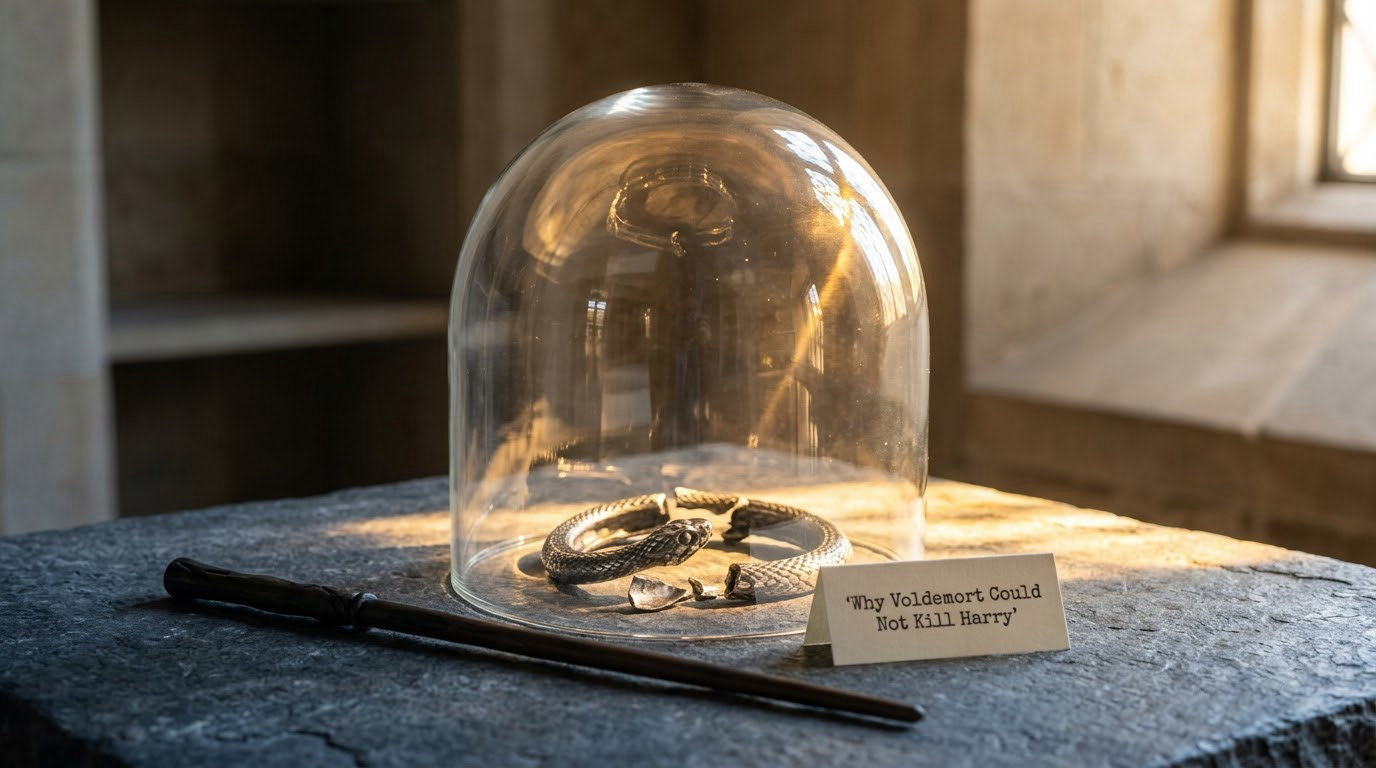
There is no single moment where Voldemort lost the ability to kill Harry. The protection was built in stages across seventeen years, and each stage answers a different part of the question.
| Reason | What it blocked | When it was active | Source |
|---|---|---|---|
| Lily’s sacrificial protection | The 1981 Killing Curse rebounding onto Voldemort | 31 October 1981, in Godric’s Hollow | PS Ch. 16 |
| The blood bond | Harry dying while Voldemort lived, and Voldemort touching Harry | June 1994 onward | GoF Ch. 33, King’s Cross Ch. 37 |
| Harry as an unintentional Horcrux | The 1998 curse finishing Harry off | That night in 1981 onward | DH Ch. 33 and 36 |
| Elder Wand allegiance | Voldemort’s spells behaving the way he intended in the final duel | The forest duel, 2 May 1998 | DH Ch. 36, King’s Cross Ch. 37 |
Why Voldemort Could Not Kill Harry: The Protection Chain
Four events, in this order, make the answer work. Voldemort chose Harry as his target. Lily placed herself between them and refused to move. Voldemort killed her by choice, not by accident, which is the ingredient sacrificial magic requires. And the curse rebounded.
Sacrificial protection is not a spell you can teach. It forms when someone dies to protect another person and means it. Lily had a way out, and Voldemort offered it to her. Her refusal is what made the magic.
This is also why James’s death carried no protective charge, which comes up often enough to be worth answering. James fought Voldemort and died, but he died defending himself. Lily died for her child. Sacrifice needs an object, and only one of them chose one.
Film versus book: what the curse actually looked like
The books describe no beam, no flash of green light and no rebounding lightning. In Harry Potter and the Philosopher’s Stone Chapter 16, Hagrid simply arrives at the house and finds Harry alive on the floor, Voldemort gone, and a mark on the baby’s forehead that says he survived.
The films added the Avada Kedavra shooting back into Voldemort and a duel between Dumbledore and Voldemort that never happened in that form. Dumbledore’s death in Half-Blood Prince is also a film invention. If you learned this part of the story from the movies, some of the mechanics you have will not be in the text.
Did Lily’s Protection Make Harry Immune to Voldemort?
No. It protected him from Voldemort and from almost nothing else, and it stopped working entirely once Voldemort swallowed Harry’s blood.
Dumbledore’s account in Deathly Hallows Chapter 33 and again in King’s Cross Chapter 37 is precise about the limits. While Voldemort was Harry’s legal guardian, the charm counted as standing between them. Harry fell off a broomstick, fought a dragon and was hexed, bitten and nearly drowned, and none of that mattered, because none of it was Voldemort.
The protection also had a second job, and this is the part most summaries miss. It kept Voldemort from touching Harry. That is why the snake could not bite him at the party in Philosopher’s Stone Chapter 17, and why Voldemort himself never laid a hand on him across thirteen years at Hogwarts.
Then in 1994 Voldemort drank from the basin of blood in Goblet of Fire Chapter 33, and Harry’s blood was in the potion. Dumbledore said it plainly: the charm was swallowed into Voldemort’s veins, where it belonged to Harry no longer.
After that, Harry could be killed by Voldemort in principle. The protection was gone. What remained was the blood bond, which is a different mechanism with a different set of rules.
Why Could Voldemort Not Touch Harry After the Attack?
Voldemort’s body was destroyed in 1981. What survived was his soul, already torn apart by the murders he had committed to make his own Horcruxes, plus the fragment he had just lost when the rebounded curse struck him.
A soul with no body is not a person. Voldemort spent thirteen years as a shadow attached to his Horcruxes, unable to walk a corridor, eat a meal or hold a conversation. The reason he needed a body back is the same reason the protection kept him off Harry: the charm forbade contact.
The scar on Harry’s forehead is often read as the explanation. Canon gives it less than that. Dumbledore’s position, stated in Order of the Phoenix, is that the connection ran both ways, with pain as the only traffic it carried. Voldemort felt Harry suffer; Harry felt Voldemort’s rage. That is a link, not a shield.
What the link did do, according to Dumbledore, was tell Voldemort that killing Harry would be a disaster. Destroying your last Horcrux means losing your soul. Voldemort had already done the arithmetic in 1995 and decided Harry had to die by his own hand, which is a circular fear rather than a magical barrier.
Was Harry’s Survival Really Because He Was a Horcrux?
No. Harry was not saved by the Horcrux connection. He was saved by his mother, and the Horcrux fragment in his body was the reason the 1998 curse did not finish him.
An unintentional Horcrux is a specific thing. Voldemort unknowingly committed a murder when the Killing Curse struck Harry. Because the fragment of soul he had just ripped off landed inside another living person, that person became a Horcrux by accident, and the process required neither ritual nor intention.
Dumbledore suspected as early as the graveyard in Philosopher’s Stone. He was watching Voldemort with particular attention that year and says so himself. What he could not do was tell Harry, because Voldemort would have known the moment the knowledge surfaced.
In Deathly Hallows Chapter 36, the forest duel, Voldemort casts Avada Kedavra with his own body. Harry sees the green light, feels the pain of it, and remembers that he is a Horcrux. Voldemort kills the fragment. Harry drops. Voldemort’s soul loses its last piece.
So the reason Voldemort could not kill Harry that night is not that the curse rebounded. It did not rebound. The reason is that Harry was a Horcrux, and a curse meant to destroy a Horcrux has nothing left to do once the Horcrux is gone.
Two castings, seventeen years apart:
| Detail | 1981, Godric’s Hollow | 1998, the Forbidden Forest |
|---|---|---|
| Who cast it | Voldemort, in his own body | Voldemort, in his own body |
| Who was the intended target | Harry | Harry |
| Did it rebound | Yes, onto Voldemort | No |
| What it destroyed | Voldemort’s body | The Horcrux inside Harry |
| Wand involved | Voldemort’s wand | The Elder Wand, held by Harry |
| Who walked away | Harry, alive and unaware | Harry, alive, and Voldemort dead |
That table answers the question readers in r/harrypotter keep asking, and it answers it with the text rather than inference. Same wizard, same spell, same target, opposite results, because the magical situation underneath had changed.
Why Did Voldemort Fail to Kill Harry as an Adult?
Voldemort failed for two different reasons that get blurred together. For most of the series he failed because killing Harry was a bigger problem than Harry. In the forest he failed because the curse was aimed at the wrong thing.
Once Harry was an accidental Horcrux, Voldemort was in the same position as a man trying to destroy his own heart. His soul was anchored to Harry while Harry lived. Every other Death Eater was untouchable for the same reason Voldemort was, so he believed, and Harry confirmed it at the Department of Mysteries in Order of the Phoenix.
That is also the answer to the thread that asks why Voldemort did not simply order Bellatrix to finish him. She did try, repeatedly. She could not, because of the blood bond, and by the time Voldemort returned to a body in 1995 that bond was the most dangerous magic in play.
Every failed attempt, in book order:
| Book and year | Attempt | Why it failed |
|---|---|---|
| PS, 1991 | Quirrell, with Voldemort riding behind him | Lily’s charm forbade Voldemort’s touch, so he could only work through a host |
| PS, 1992 | The Chamber of Secrets and the diary | His memory could not touch Harry, so it possessed Ginny and used others to do the work |
| PS, 1992 | Following Harry home from Hogsmeade | He could not follow past the boundary of the protection |
| PoA, 1993 | Borgin and Burkes, the Leaky Cauldron | Voldemort could not touch him, so could not read his mind |
| GoF, 1994 | The graveyard ambush and the third task | Priori Incantatem rebound the curse on Voldemort and his Death Eaters |
| GoF, 1995 | Cedric and Hermione used as bait | The blood bond made Harry a liability to harm |
| OotP, 1996 | The Department of Mysteries | Fulminated at the veil, returned as a phantom |
| HBP, 1996 | Malfoy Manor and the cellar | Harry would not betray friends under pressure |
| DH, 1997 | The ambush at the Burrow and the forest | Harry’s will to die, and the Horcrux fragment taking the curse |
Read that list and a pattern shows up. Voldemort’s plans kept failing not because Harry was hard to hit but because Voldemort was attached to him. Killing Harry meant killing himself. Dumbledore understood that years before Voldemort did, which is why he pushed Harry toward Voldemort every time he could.
The 1995 graveyard is the clearest example. Voldemort could have ordered Wormtail to stand there instead. He wanted to kill Harry himself, in front of a school full of witnesses, so the school would see its champion defeated. He wanted the moment.
What Does the Protection Reveal About Lily and Harry’s Bond?
Worth noticing: the charm was not a family trait. Snape loved Lily enough to hate Harry, and none of that protection was for him. Sacrifice is not inherited here, and neither is magical love.
The protection also ran out. Voldemort carried it in his body for four years and it did nothing for him, which is the answer to the sharpest logical hole in the fandom, the one raised in that Reddit thread about Lily’s charm being inside Voldemort. Dumbledore’s answer in King’s Cross Chapter 37 is that the charm’s work was finished. It had been designed to save Harry once, and it did.
Harry grew up believing his parents had abandoned him and that he was nothing special. Dumbledore’s whole plan depended on a boy who did not know he was significant, because a chosen child who knew he was chosen is not a target, he is a spokesman.
So when Harry walks into the forest and asks Voldemort to kill him, the thing beating inside his chest is not hope. It is his mother’s decision from 1981 finally being repaid on the only terms it was ever made for: Harry, choosing to give himself up, and nobody else choosing for him.
Frequently Asked Questions
Why did Voldemort’s Killing Curse rebound back to him?
Because Lily chose to die rather than step aside, and that choice created sacrificial magic. Voldemort’s curse struck the protection instead of Harry and rebounded onto its caster, destroying Voldemort’s body. It worked once, on the one occasion the conditions were met.
Did Lily’s protection make Harry completely invulnerable?
No. It shielded Harry from Voldemort and from Voldemort’s creatures while Voldemort was his legal guardian. Harry still fell from brooms, fought dragons, got hexed and was bitten by a basilisk. And in 1994 Voldemort drank Harry’s blood, swallowing the protection into his own veins.
How did Harry become a Horcrux without Voldemort intending to make one?
Voldemort had already torn his soul apart into Horcruxes. When the rebounded curse ripped off another fragment, it landed inside Harry, killing a person in the process. Voldemort never chose it and did not notice for years, which is why it is called an unintentional Horcrux.
Why could Voldemort not touch or understand Harry after their attack?
Lily’s charm specifically forbade Voldemort’s touch, which is why his snake could not bite Harry and why no Death Eater could read his mind. Voldemort felt Harry’s pain through the scar, but the connection carried pain and rage in both directions rather than understanding. It warned him, and it frightened him.
Was Harry protected because of his mother’s sacrifice or because he was a Horcrux?
Both, at different moments. The sacrifice saved him as an infant in 1981 and is the reason he lived at all. The Horcrux fragment is what saved him in 1998, when the curse destroyed the fragment instead of him. The two events are separate, and neither one cancels the other out.
Could Voldemort have killed Harry with a different wand or spell?
No. The wand made no difference, because the protection turned the curse back regardless of who held it. A different spell might have done more damage, but Voldemort’s real constraint was the blood bond. As long as he lived, Harry had to live, so no method would have worked.
Conclusion
So: why Voldemort could not kill Harry has two halves, and people usually mix them up. In 1981, Lily’s sacrificial protection bounced the Killing Curse back and destroyed Voldemort’s body. That is what saved Harry as a baby, and nothing about the Horcrux played any part in it.
From 1994 onward, Voldemort was tied to Harry through shared blood and a soul fragment he did not know he had lost. He was not blocked by magic each time he failed. He was the one who could not let Harry die, because Harry dying meant Voldemort dying.
The Elder Wand is the fourth layer, and it is the smallest one. Voldemort never won its allegiance, so he never beat Harry in a straight duel even holding it.
If you want the mechanics to land, reread Deathly Hallows Chapter 33 and then the Dumbledore conversation in Harry Potter and the Cursed Child. Between them, everything above is stated plainly by the character with the most reason to know.